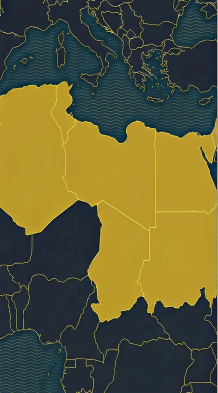
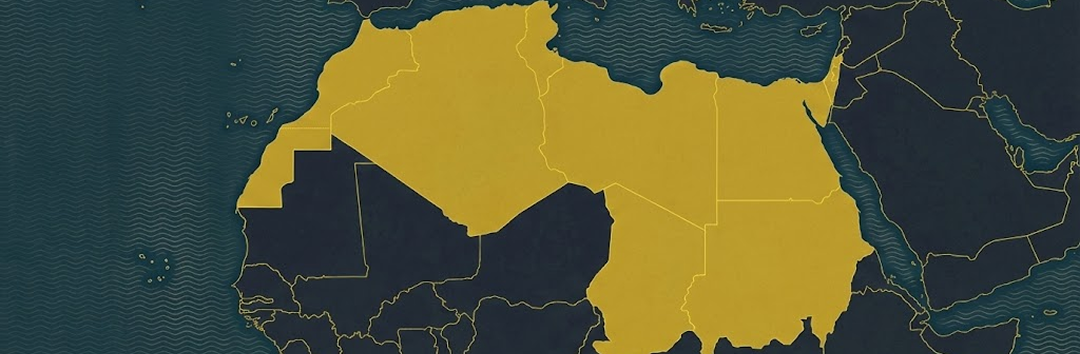
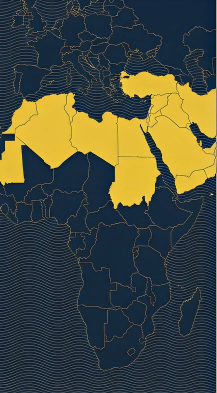
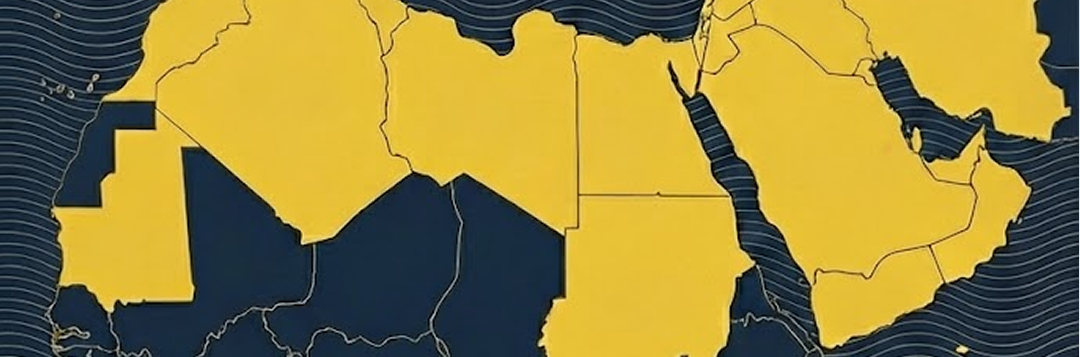
Welcome to MENA Art
Exclusive access to galleries and artists across the region etc.
Search the ADAI marketplace by uploading an image and explore visually similar artworks.

Drag an image here


Exclusive access to galleries and artists across the region etc.
Art investment in the MENA region is evolving rapidly, blending cultural insight with strong market growth.
Would you like to:
ADAI works with artists across the Middle East and North Africa to ensure their work is seen, understood, and contextualized. Representation on ADAI means supporting artists through curated visibility, research, and digital presentation, connecting their work to audiences, exhibitions, and broader cultural conversations.
Artists featured on ADAI are not exclusively signed or commercially represented— instead, ADAI provides a platform to showcase your practice, highlight your perspective, and situate your work within the evolving landscape of MENA art.
By representing your work on ADAI, you gain access to:
Representation is about visibility, context, and community - helping your art reach the right audiences while respecting your autonomy as an artist."
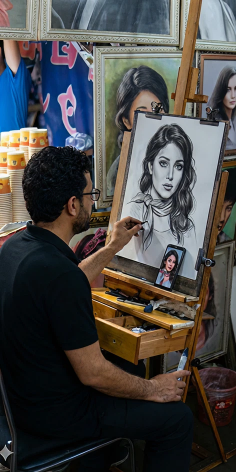
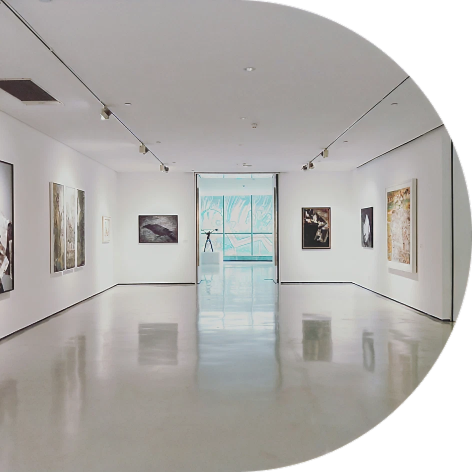
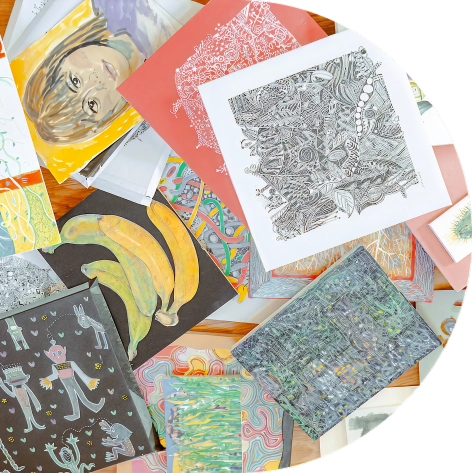
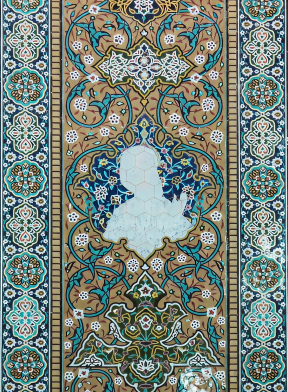
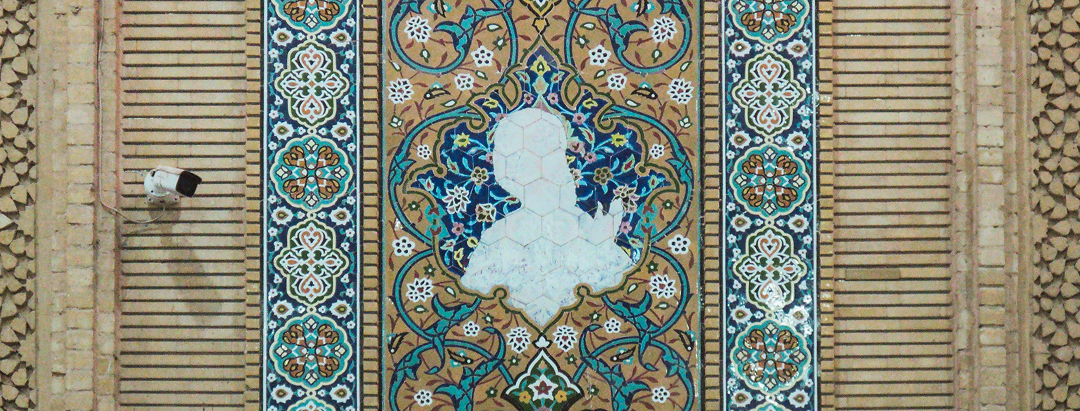
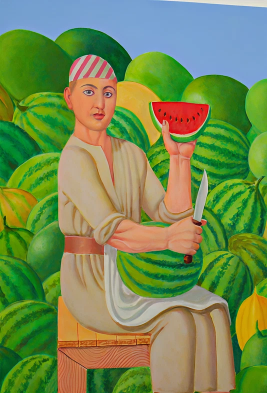
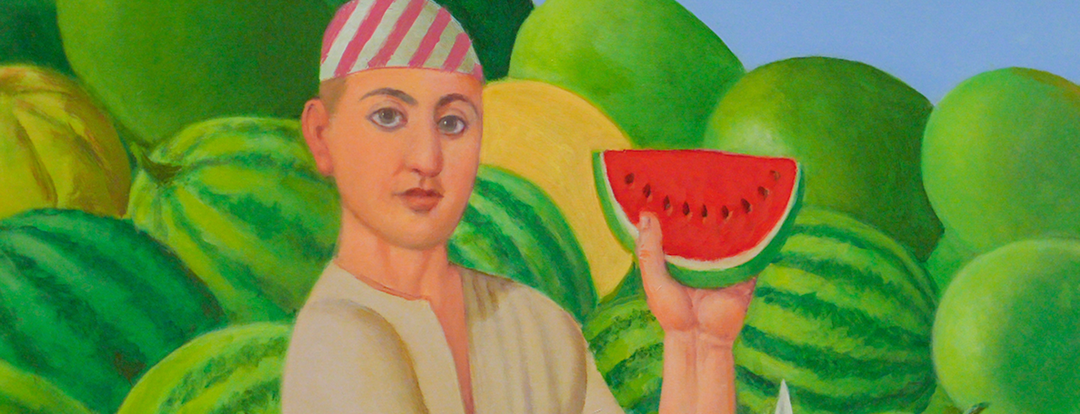
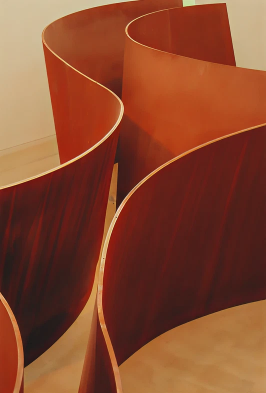


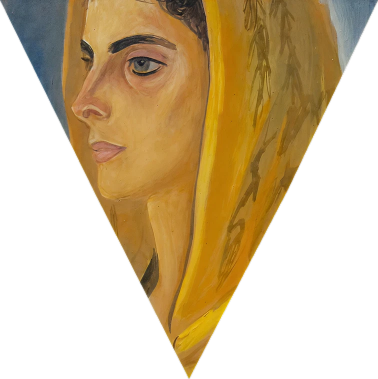
Often referred to as the era of Al-Ruwad (The Pioneers), this period marks the birth of modern Arab art. Many of these artists were sent on government-sponsored scholarships to study in European capitals like Paris and Rome. Upon returning home, they blended Western academic techniques (such as Impressionism and Realism) with local subjects, landscapes, and the emerging concept of national identity.

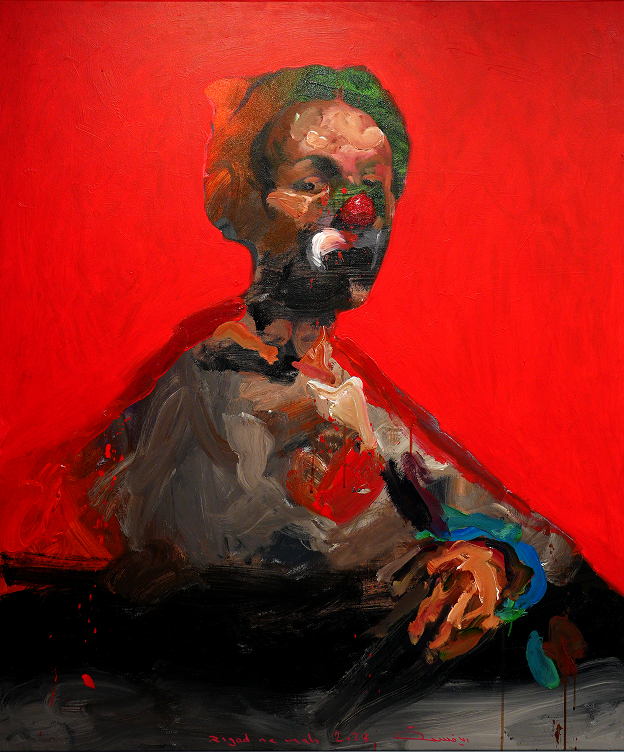
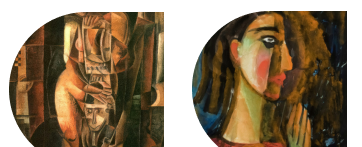
This period was heavily defined by regional political turmoil, most notably the 1967 Six-Day War (the Naksa or 'setback'), the Palestinian exodus, and the Lebanese Civil War. Art became a crucial tool for resistance, political commentary, and documenting human suffering. Existential angst and national trauma led to an emotionally charged, often somber, figurative expressionism.
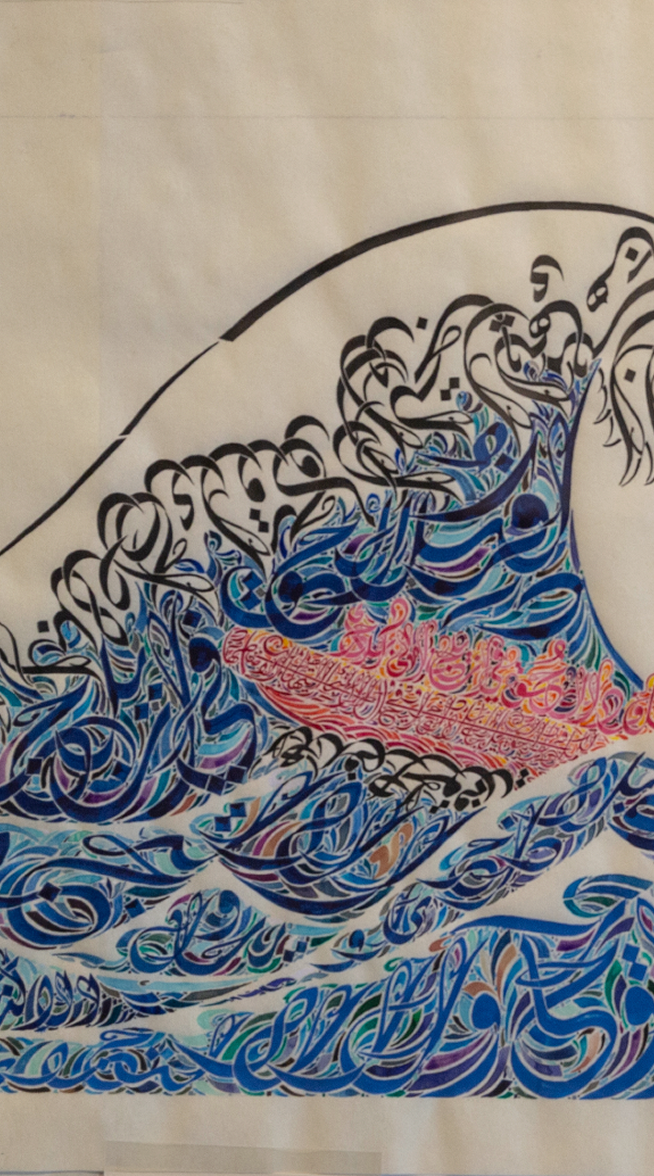
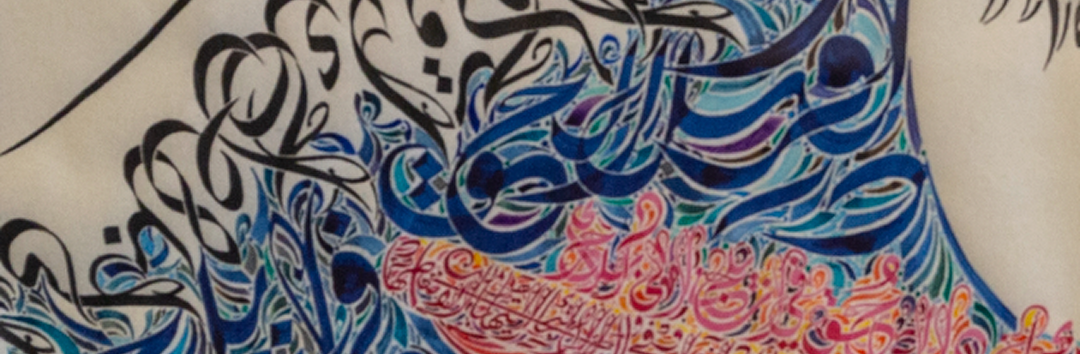
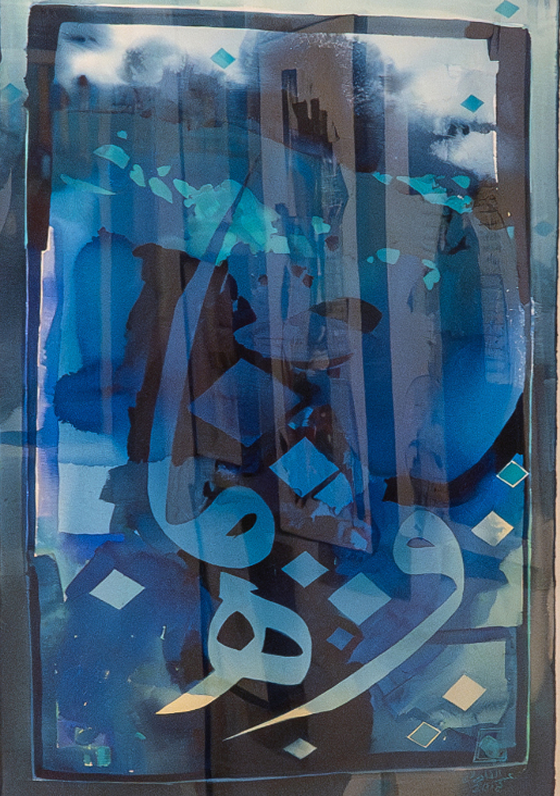
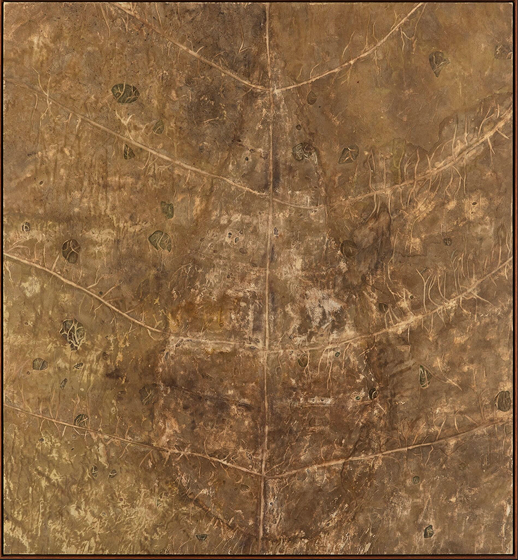
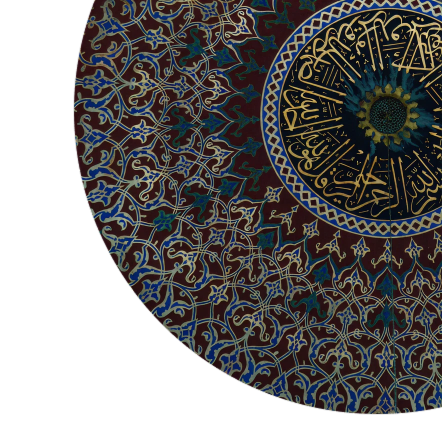
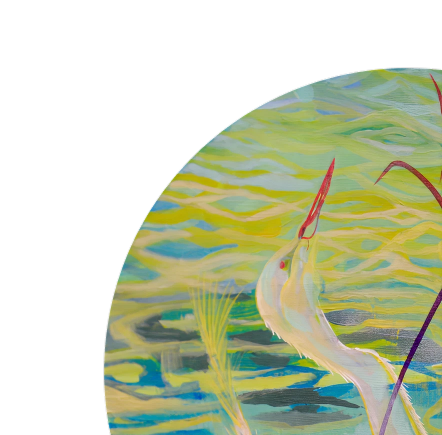
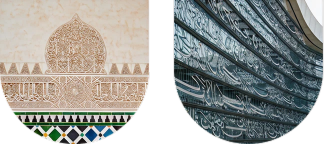
The Hurufiyya (Letterism) movement is arguably the most significant and cohesive modernist movement to emerge from the Arab world. Artists deconstructed Arabic calligraphy, liberating the letters from their linguistic and religious functions to use them as purely abstract, rhythmic, and visual elements. This allowed them to engage with global abstract expressionism while remaining deeply rooted in Islamic and Arab heritage.
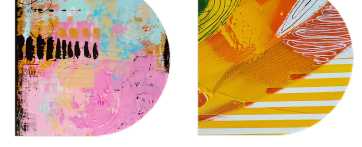
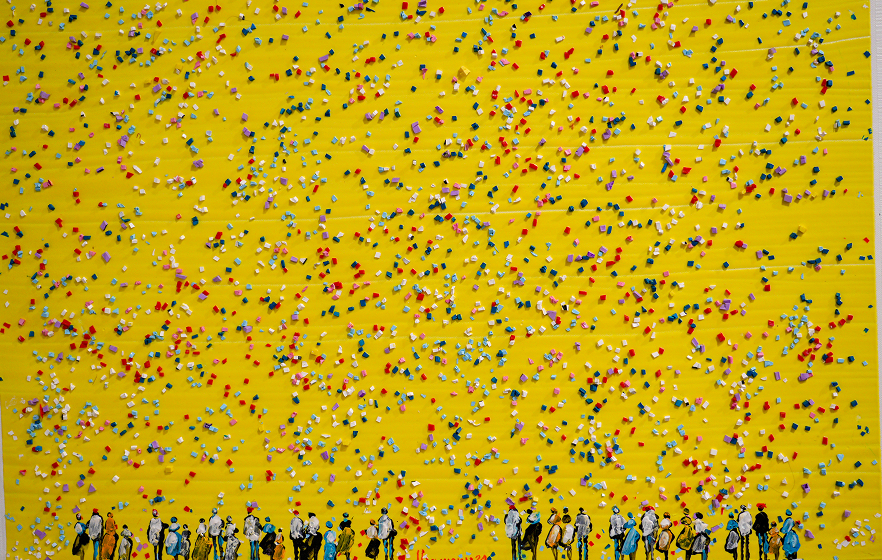
Driven by globalization, the diaspora experience, and new technologies, Arab art in this era expanded well beyond traditional painting and sculpture. It became heavily characterized by video, photography, installation, and performance art. Operating on a global stage, these artists tackle complex themes of post-colonialism, migration, memory, borders, and gender identity.
This helps us curate better recommendations for your taste


Drag & Drop your image here
or
This helps us curate better recommendations for your taste
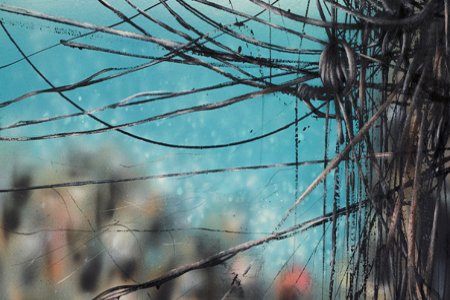
OFF THE GRID / اشتراك reflects on Lebanon's electricity crisis and Beirut's web of generator wires that have become part of the city's visual identity. Dyala Khodary explores how temporary infrastructure has normalized instability, revealing its lasting social and environmental impact.
Curatorial text
Art on 56th Gallery is pleased to present OFF THE GRID / اشتراك, a solo exhibition by Lebanese artist Dyala Khodary.
This exhibition considers the transformation of Beirut’s urban landscape through its electricity crisis and the hybrid systems of infrastructure that have emerged in response. Within this context, Khodary’s practice, which moves between abstract and figurative approaches within a conceptual framework, becomes a means of reading the city as both image and structure, surface and system.
The reliance on private generator subscriptions, commonly referred to as ishtirak, has produced a dense and informal electrical network that now defines much of Beirut’s visual environment. Exposed wires, improvised connections, and layered technical interventions have become embedded in the city’s architecture, reshaping not only how it functions but also how it is perceived.
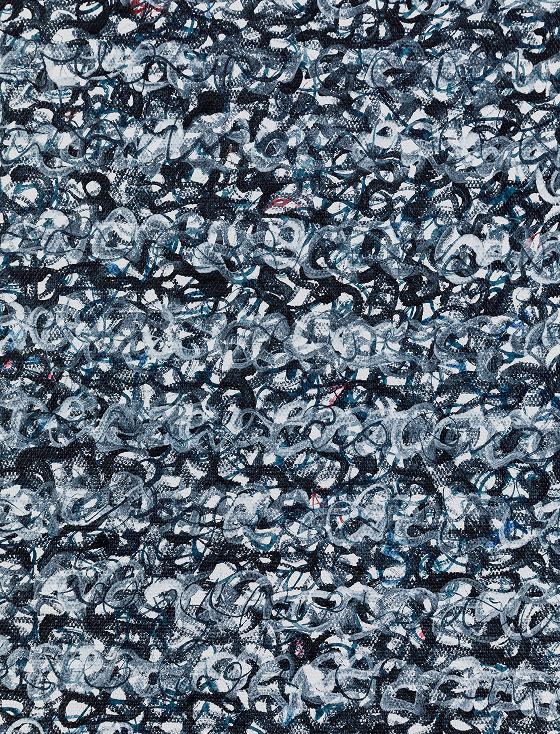
In Khodary’s work, these elements are not treated as documentary motifs, but as visual systems in themselves. The tangled circuitry of the city is translated into compositions where order and disorder coexist, where repetition, fragmentation, and layering echo the conditions of urban instability. What appears at first as visual chaos gradually resolves into a structured language of adaptation.
Rather than representing crisis directly, the exhibition examines its slow normalization. Infrastructure becomes both subject and metaphor, revealing how temporary solutions accumulate into permanent urban conditions. The city emerges as a surface continually rewritten by necessity, where visibility and invisibility operate in tension.
Through OFF THE GRID / اشتراك, Khodary’s practice opens a reading of Beirut as an evolving system of traces, material, visual, and social, where everyday infrastructures quietly shape the aesthetic and emotional experience of the city.
Artist Statement
Lebanon’s ongoing electricity crisis and the hybrid energy systems that emerged from it have profoundly reshaped Beirut’s urban landscape. The widespread reliance on private generator subscriptions, commonly referred to as ishtirak, has produced a dense network of exposed wires, improvised hookups, and visible electrical infrastructure across the city.
Over time, these tangled cables and overlapping connections have become part of Beirut’s visual identity. What first appears as urban disorder gradually transforms into a familiar visual language, a continuous scribbling across the cityscape. Beirut becomes, in this sense, a scribbled city.
Yet these networks extend beyond what is visible. The same system that powers daily life also produces noise, pollution, and emissions that permeate the urban environment. What began as a temporary solution has become a permanent layer of the city. Alongside the cables and hookups runs a less visible reality of air pollution and long-term health risks, consequences that often remain overlooked.
Through these forms, the work reflects on infrastructure, adaptation, and the normalization of instability in everyday life.
Dyala Khodary
أعادت أزمة الكهرباء المستمرة في لبنان وأنظمة الطاقة الهجينة التي نشأت عنها تشكيل المشهد العمراني لبيروت بشكلٍ عميق. فقد أدّى الاعتماد الواسع على اشتراكات المولّدات الخاصة، المعروفة شعبياً باسم «الإشتراك»، إلى ظهور شبكة كثيفة من الأسلاك الظاهرة، والتوصيلات المؤقتة، والبُنى الكهربائية المكشوفة في أنحاء المدينة.
ومع الوقت، أصبحت هذه الأسلاك المتشابكة والتوصيلات المتداخلة جزءاً من الهوية البصرية لبيروت. فما يبدو في البداية كفوضى عمرانية يتحوّل تدريجياً إلى لغة بصرية مألوفة، أشبه بخربشات متواصلة تعبر المشهد الحضري. وهكذا تصبح بيروت، بطريقة ما، مدينةً مخربشة.
لكن هذه الشبكات تتجاوز ما هو مرئي. فالنظام نفسه الذي يزوّد الحياة اليومية بالطاقة ينتج أيضاً الضجيج والتلوث والانبعاثات التي تتسرّب إلى البيئة الحضرية. وما بدأ كحلّ مؤقت تحوّل إلى طبقة راسخة في نسيج المدينة. وإلى جانب الأسلاك والتوصيلات، تمتدّ حقيقة أقلّ ظهوراً تتمثّل في تلوّث الهواء والمخاطر الصحية طويلة الأمد، وهي تبعات غالباً ما تغيب عن الأنظار.
ومن خلال هذه العناصر، يتأمل العمل مفاهيم البنية التحتية، والتكيّف، وتطبيع عدم الاستقرار في الحياة اليومية.
ديالا خضري