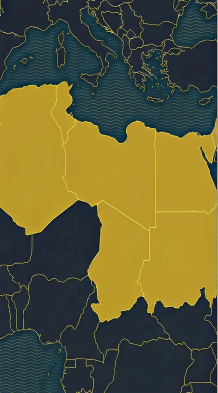
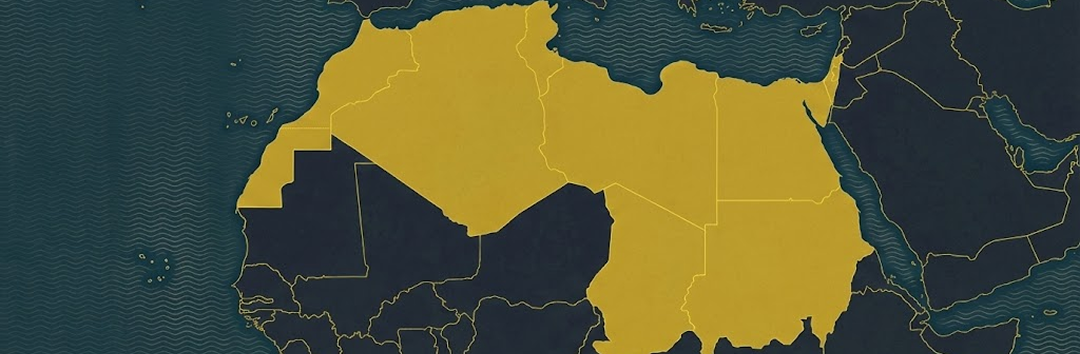
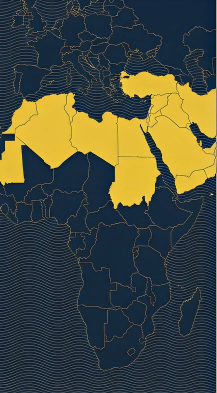
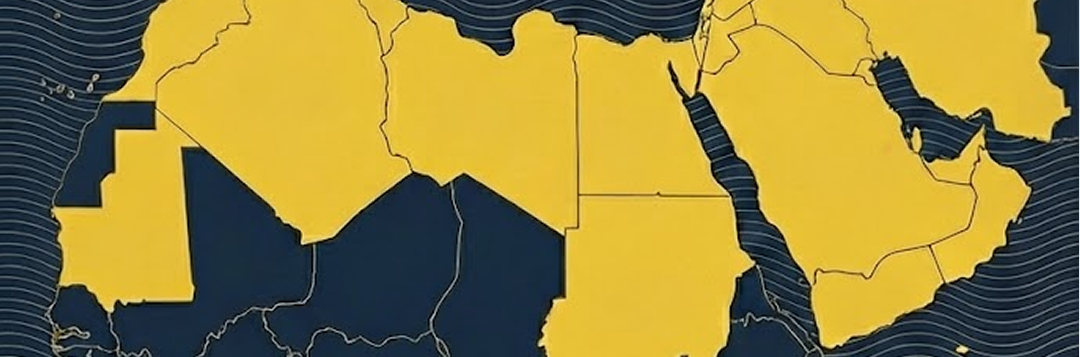
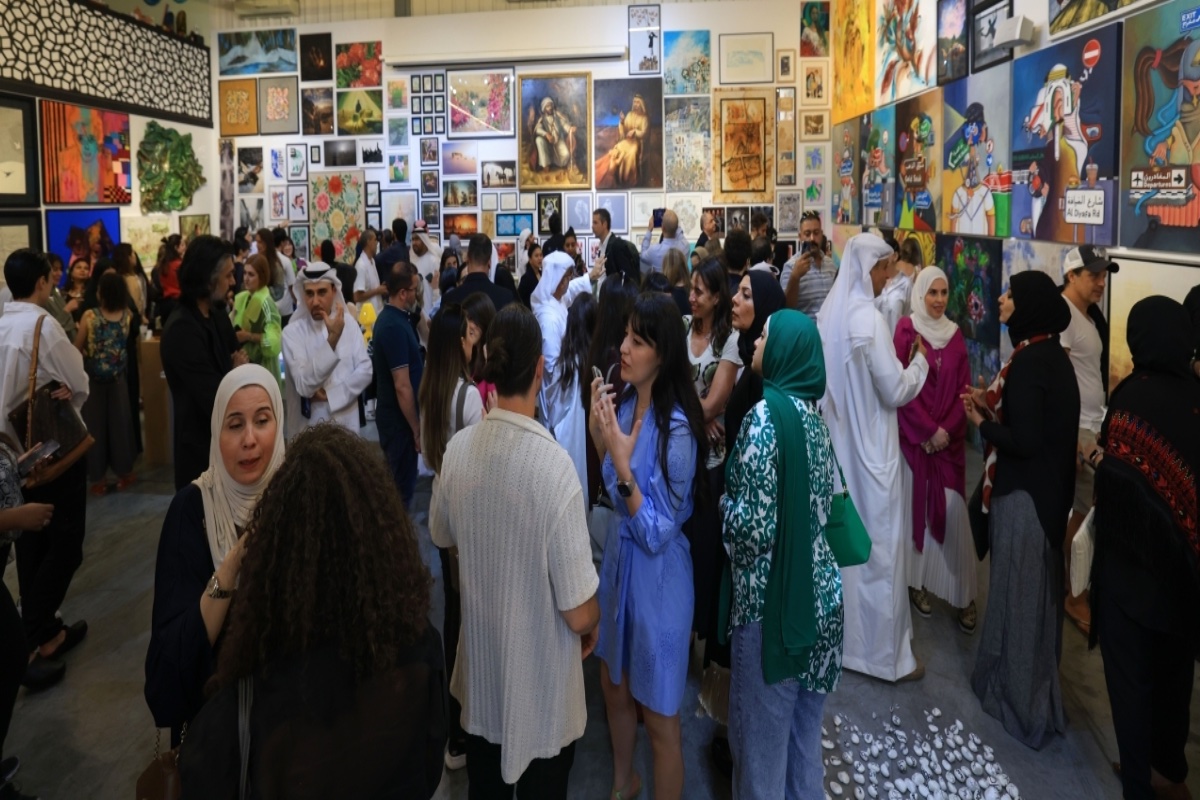
Welcome to MENA Art
Exclusive access to galleries and artists across the region etc.
Search the ADAI marketplace by uploading an image and explore visually similar artworks.

Drag an image here

Exclusive access to galleries and artists across the region etc.
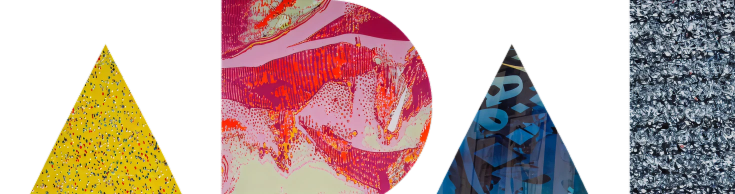
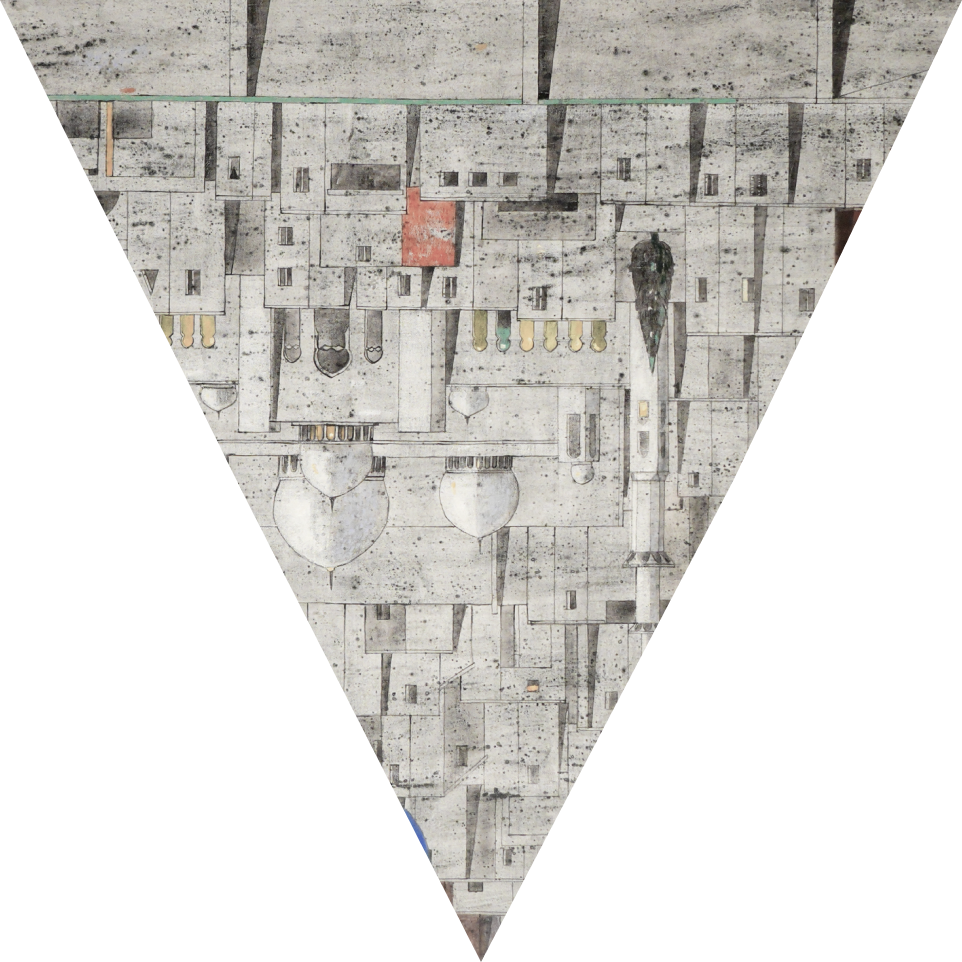
Art investment in the MENA region is evolving rapidly, blending cultural insight with strong market growth.
Would you like to:
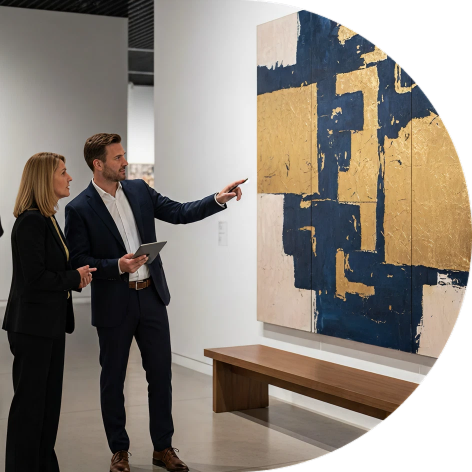
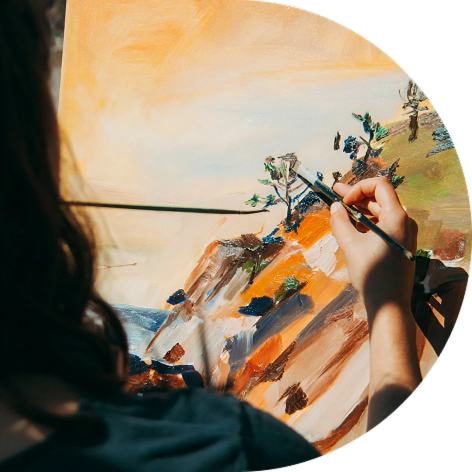
ADAI works with artists across the Middle East and North Africa to ensure their work is seen, understood, and contextualized. Representation on ADAI means supporting artists through curated visibility, research, and digital presentation, connecting their work to audiences, exhibitions, and broader cultural conversations.
Artists featured on ADAI are not exclusively signed or commercially represented— instead, ADAI provides a platform to showcase your practice, highlight your perspective, and situate your work within the evolving landscape of MENA art.
By representing your work on ADAI, you gain access to:
Representation is about visibility, context, and community - helping your art reach the right audiences while respecting your autonomy as an artist."
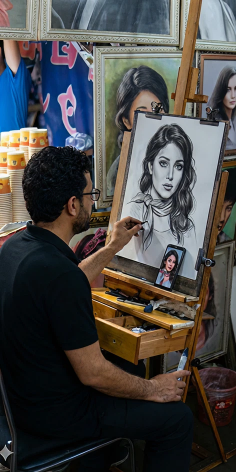
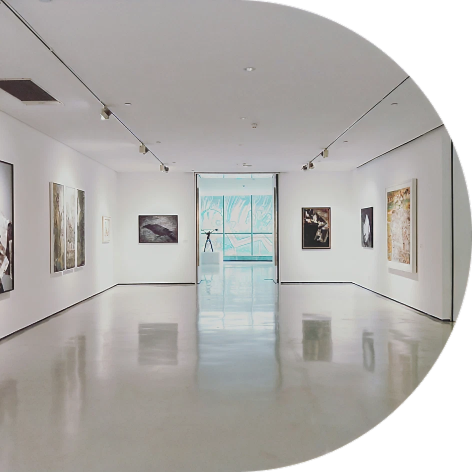
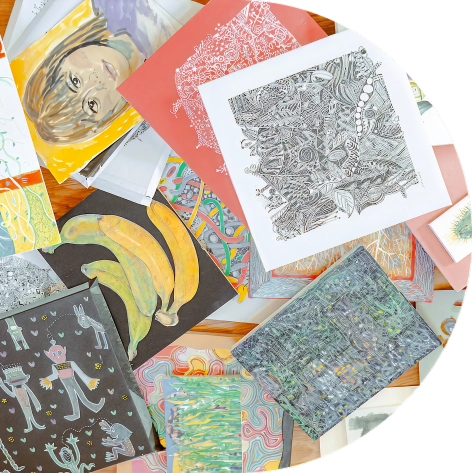
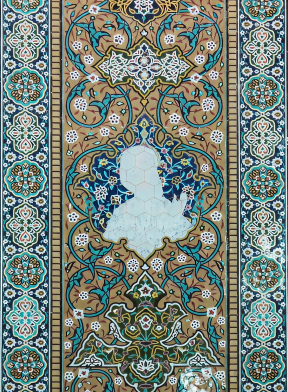
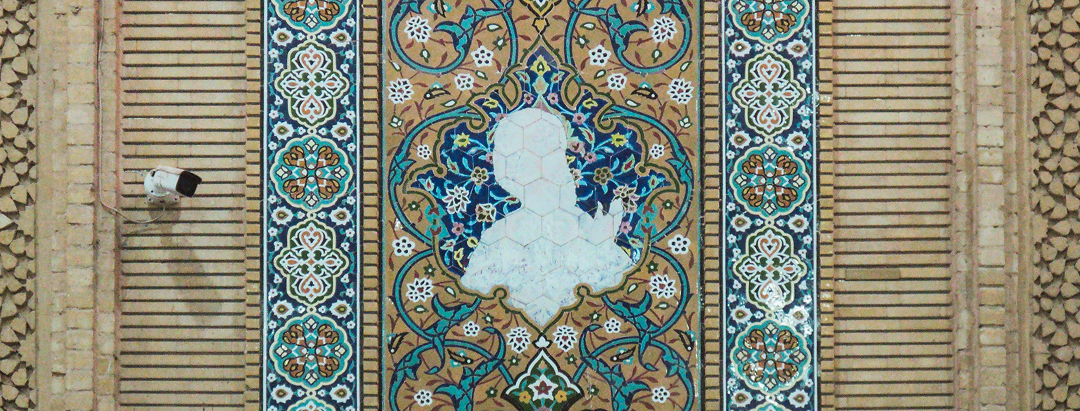
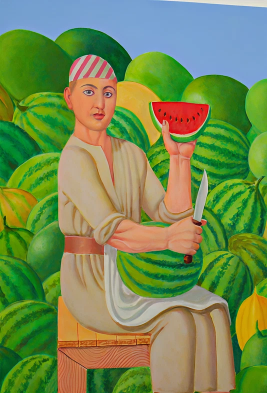
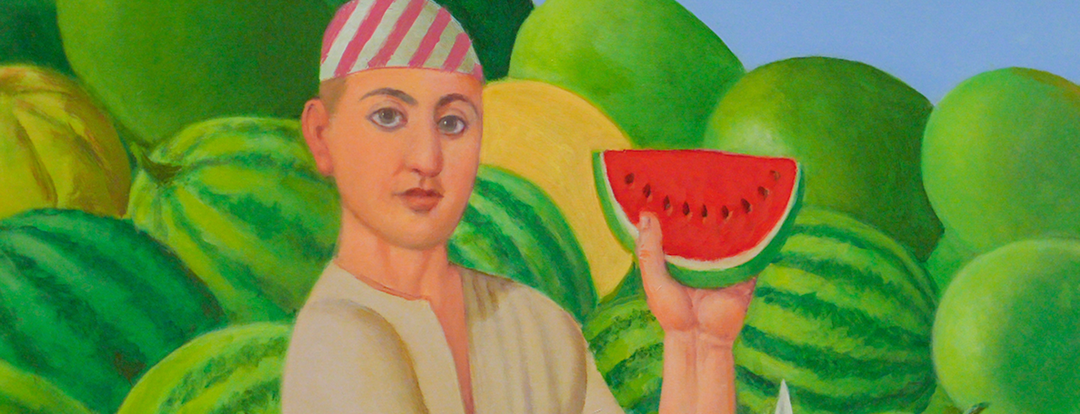
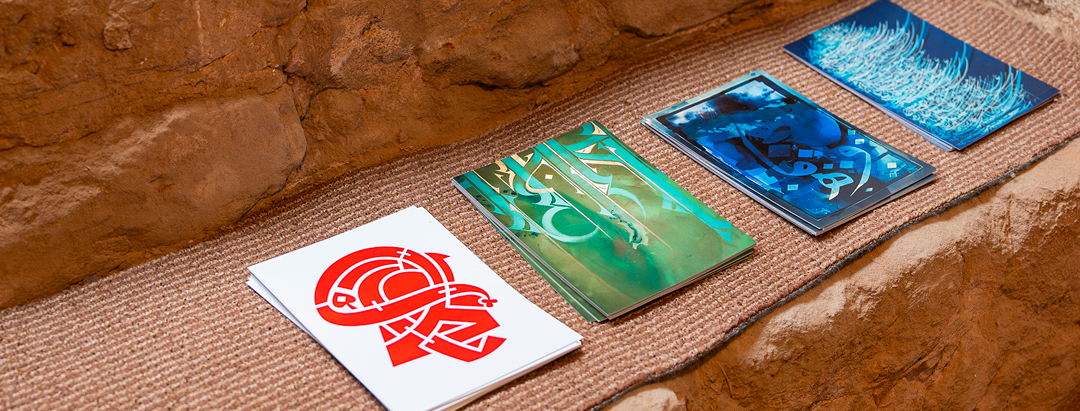

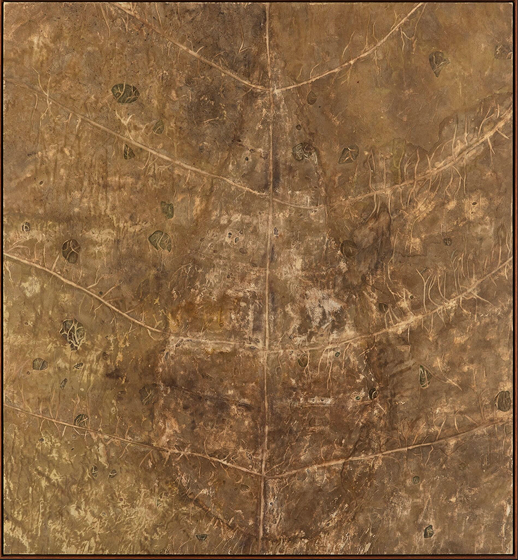
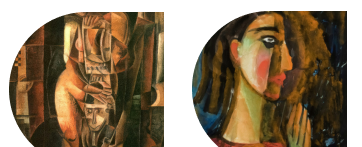
Often referred to as the era of Al-Ruwad (The Pioneers), this period marks the birth of modern Arab art. Many of these artists were sent on government-sponsored scholarships to study in European capitals like Paris and Rome. Upon returning home, they blended Western academic techniques (such as Impressionism and Realism) with local subjects, landscapes, and the emerging concept of national identity.

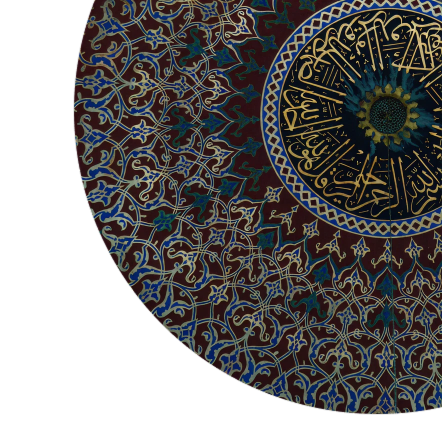
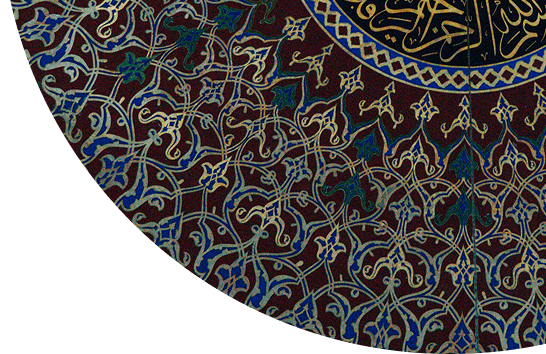
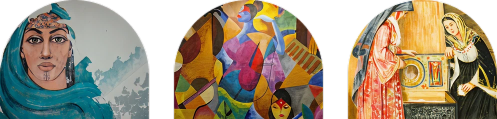
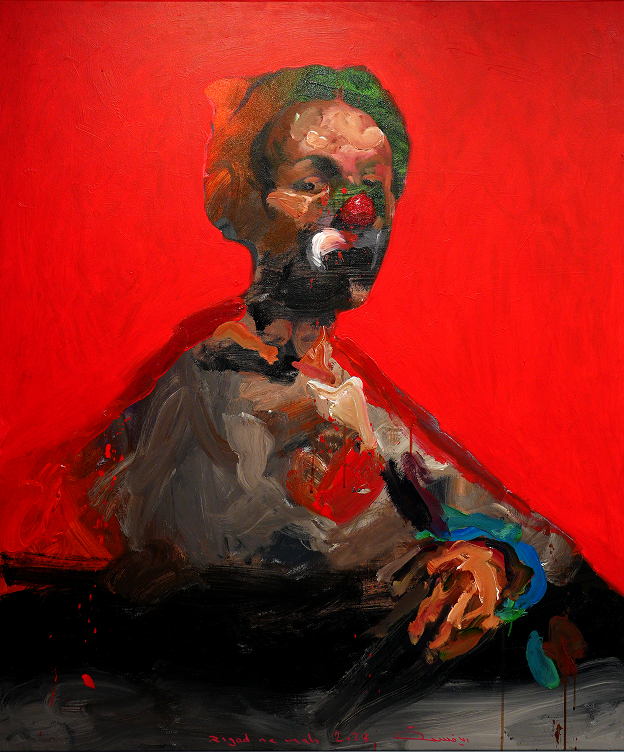
This period was heavily defined by regional political turmoil, most notably the 1967 Six-Day War (the Naksa or 'setback'), the Palestinian exodus, and the Lebanese Civil War. Art became a crucial tool for resistance, political commentary, and documenting human suffering. Existential angst and national trauma led to an emotionally charged, often somber, figurative expressionism.
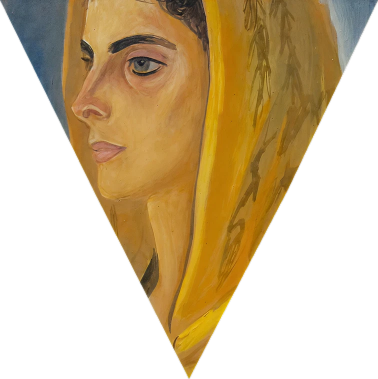
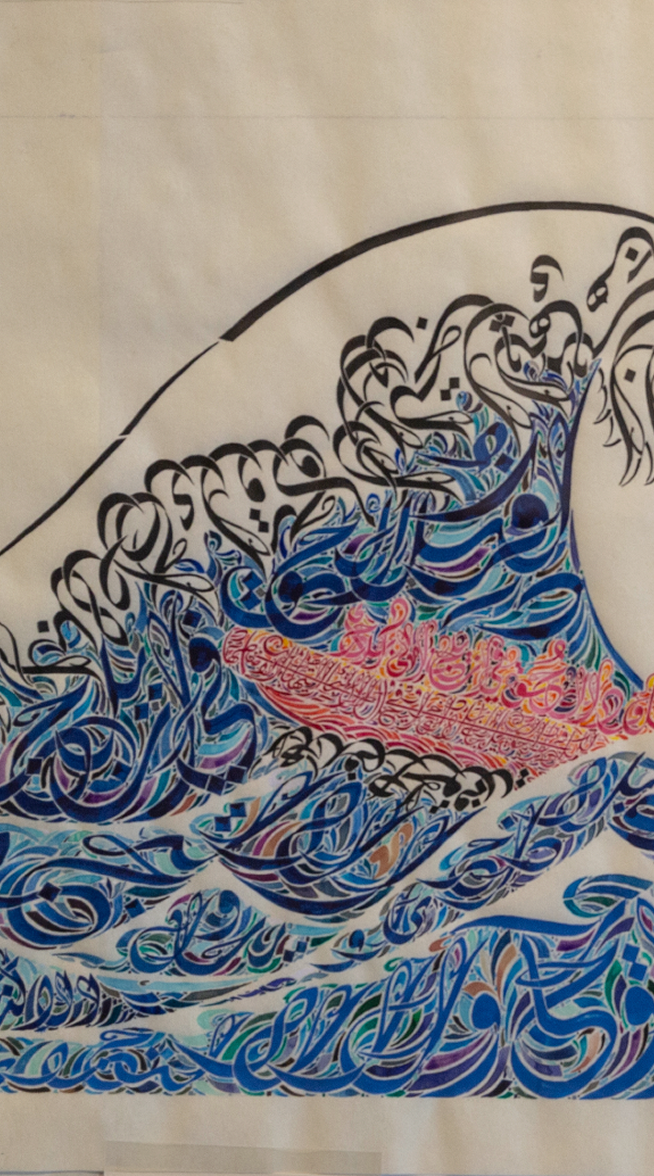
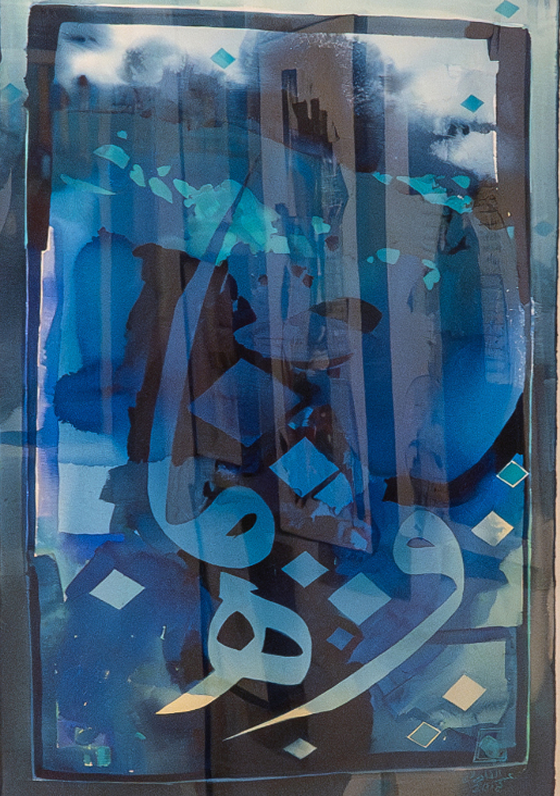
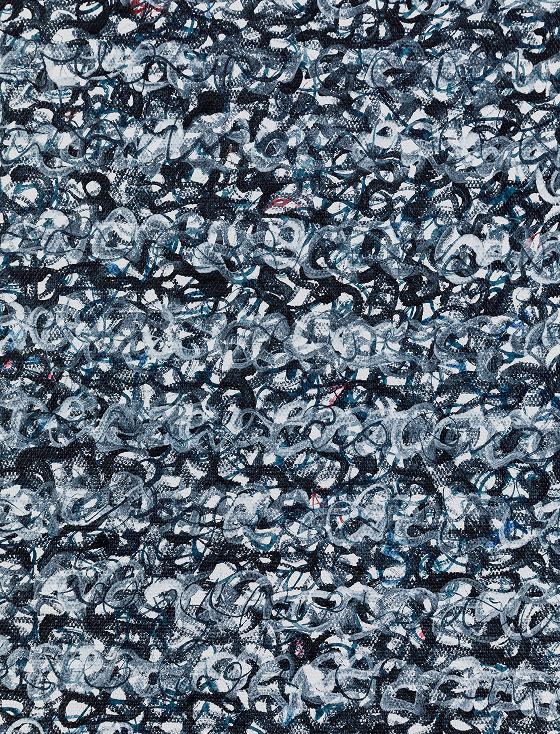
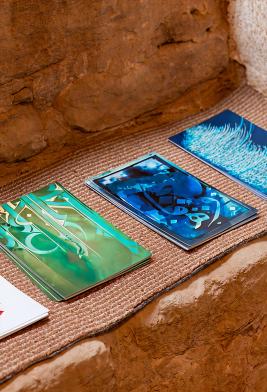
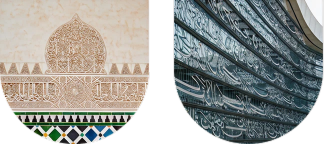
The Hurufiyya (Letterism) movement is arguably the most significant and cohesive modernist movement to emerge from the Arab world. Artists deconstructed Arabic calligraphy, liberating the letters from their linguistic and religious functions to use them as purely abstract, rhythmic, and visual elements. This allowed them to engage with global abstract expressionism while remaining deeply rooted in Islamic and Arab heritage.
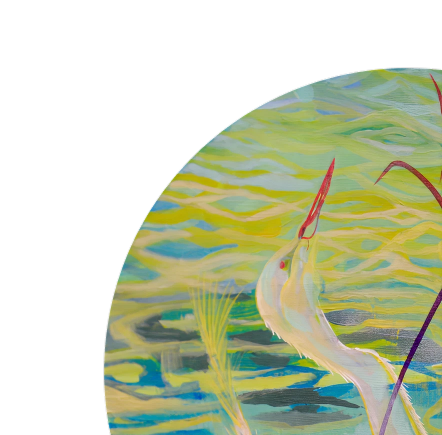
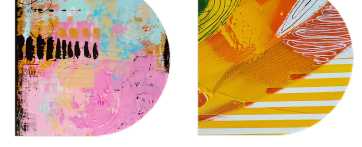
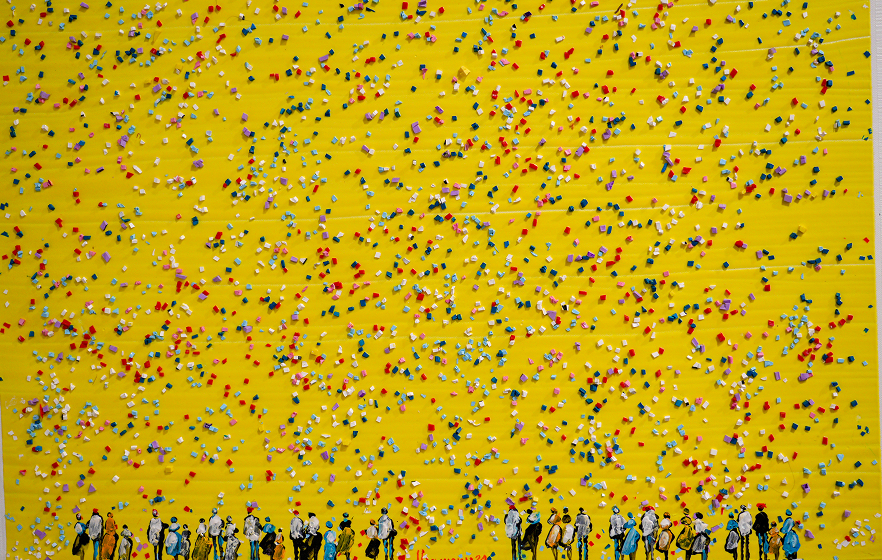
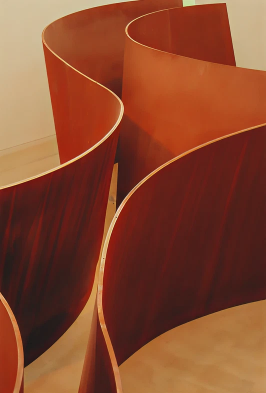
Driven by globalization, the diaspora experience, and new technologies, Arab art in this era expanded well beyond traditional painting and sculpture. It became heavily characterized by video, photography, installation, and performance art. Operating on a global stage, these artists tackle complex themes of post-colonialism, migration, memory, borders, and gender identity.
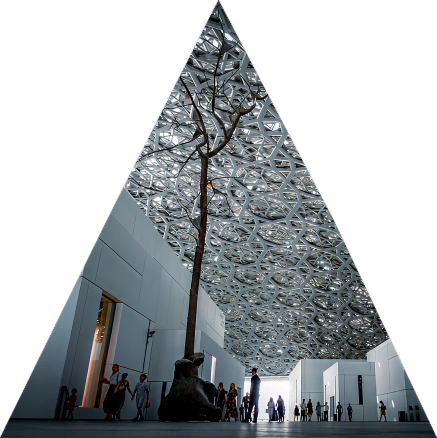
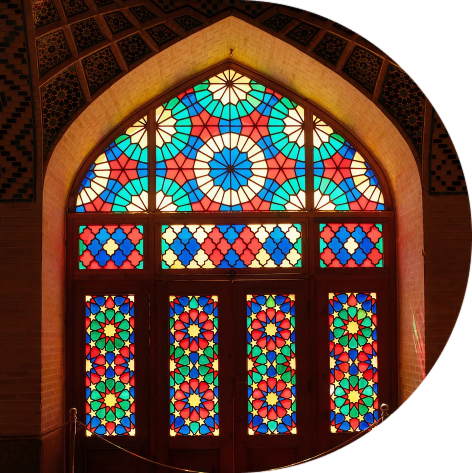
This helps us curate better recommendations for your taste


Drag & Drop your image here
or
This helps us curate better recommendations for your taste
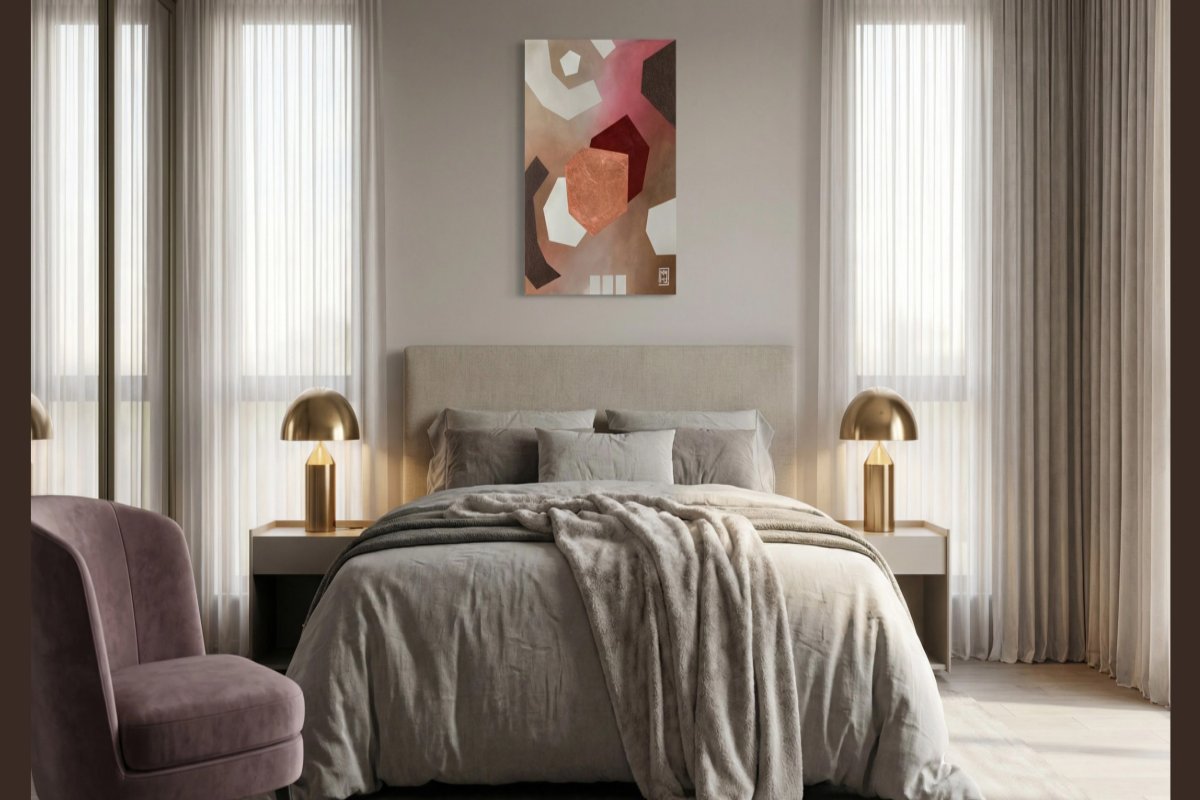
More than decoration, abstract wall art is an active participant in the energy of a home. Through color, line, composition and texture, a painting can transform any space into a sanctuary. A guide to choosing original art that truly resonates with you.
Have you ever walked into a room and it just felt right? Calm, energizing, or simply a place you wanted to be. More often than not, that feeling isn't only about the furniture or the color of the walls. It's about the energy the space holds, and wall art is one of the most powerful, yet often overlooked, tools we have to shape it.
As an abstract artist, I am fascinated by the silent dialogue between an artwork and its environment. A painting is not a static object; it is an active participant in the life of a home. It can be a source of calm in a busy living room, a point of focus for meditation, or a burst of joy in a quiet corner. This belief is the foundation of my practice, Intuitive Geometry, a philosophy dedicated to creating art for interiors that does more than decorate, it transforms.
From a House to a Home
Choosing art, especially in design-forward cities like Dubai and Abu Dhabi, can feel overwhelming. The focus is often on matching: the right shade to echo a cushion, the right size for a specific wall. While valid, these considerations risk creating a space that is aesthetically pleasing but emotionally sterile. Instead of asking "Does this match?", what if we asked, "How does this make me feel?". That simple shift is the difference between decorating a house and creating a home. An abstract painting, because it does not depict a specific person or place, leaves room for your own interpretation. It becomes a mirror for your inner world.
The Science and Soul of Energetic Design
Environmental psychology shows that the design of our spaces tangibly impacts our well-being, influencing stress, mood, creativity and productivity. The colors, shapes and textures around us constantly send signals to our subconscious. Fine art becomes a concentrated form of these signals.
Color palette: blues and greens are associated with calm and nature, while reds and oranges evoke energy and passion. Lines and shapes: soft, flowing lines feel gentle and organic; sharp, angular lines create dynamism and movement. Composition: a balanced, symmetrical arrangement feels stable and peaceful, a cornerstone of my Intuitive Geometry practice. Texture: smooth surfaces feel sleek and modern, while rough, tactile surfaces, like the sand I incorporate into my textured paintings, feel earthy and human.
A Practical Guide
Think of yourself as a curator of your own life. What feeling do you want to cultivate in each space?
For a sanctuary of calm (bedrooms, reading nooks): art with a soft palette, flowing lines and a strong sense of balance. Colors inspired by nature: the soft blues of the sea, the warm beiges of the desert, the gentle grays of a cloudy sky. A piece like my work Lalia, with its balanced composition and earthy tones, is designed to be a visual anchor for a busy mind.
For energy and connection (living rooms, dining areas): bolder colors, dynamic compositions, a sense of movement. Strong geometric shapes, like my work Nuqta, create a focal point that is both energizing and grounding, sparking conversation and adding creative flair.
For focus and clarity (home offices, workspaces): art with a clear, intentional structure. Geometric elements, clean lines and a well-defined composition help create order, while intuitive marks prevent the space from feeling sterile.
The Artist's Intention
Beyond the visual elements, there is one more factor that contributes to a painting's energy: the artist's intention. When you buy original art, you bring a piece of that artist's story into your home. When I create my paintings, I am engaged in a mindful process, pouring a specific intention into the canvas. My hope is that this intention continues to resonate long after the painting is finished, creating a lasting source of positive energy in the home it inhabits.
Your home is your sanctuary. The art you place within it should be more than decoration. It should be a source of replenishment, a reflection of your inner world, and a powerful tool for creating a space that truly nurtures your soul.
 READ NEXT ARTICLE